In the modern digital landscape, data is often called the “new oil.” However, for most businesses, that oil is trapped in outdated, clunky machinery. Traditional Customer Relationship Management (CRM) systems, which were once the gold standard for organizing leads, are now becoming operational bottlenecks.
As artificial intelligence moves from a futuristic concept to a fundamental business requirement, a massive migration is underway. Companies are abandoning legacy systems in favor of Zoho’s AI-driven ecosystem. When evaluating Zoho AI vs Traditional CRM, the difference lies in “agentic” capabilities; while older systems require manual data logging, Zoho’s Zia automatically analyzes email sentiment, predicts deal closure dates, and identifies the “Best Time to Contact” a lead.
But why now? In the debate of Zoho AI vs. traditional CRM, businesses are finding that legacy platforms offer reactive history, whereas Zoho provides proactive intelligence. This guide explores why moving away from static records to Zoho’s predictive workflows is no longer just an upgrade—it is a survival strategy. Switching to Zoho could be the most profitable decision your business makes this year to reclaim lost productivity and drive automated growth.
1. The Limitations of Traditional CRM Systems
For decades, traditional CRMs functioned essentially as digital Rolodexes. They were repositories where sales reps manually entered names, phone numbers, and notes. While better than paper, these systems suffer from three major flaws:
- Reactive Nature: Traditional systems only show you what has happened. They don’t tell you what will happen.
- Data Silos: Information often gets trapped in specific modules, making it difficult to get a 360-degree view of the customer.
- Manual Heavy Lifting: Sales teams spend more time updating the CRM than actually selling.
When a system requires more effort to maintain than the value it provides, it becomes a “data graveyard.” Businesses today cannot afford the “manual tax” imposed by legacy software. This is where Zoho AI enters the frame.
2. Introducing Zia: The Brain Behind Zoho’s AI Revolution
The biggest differentiator in the Zoho ecosystem is Zia. Unlike general-purpose AI bots, Zia is a built-in AI assistant specifically engineered for business processes.
When businesses switch from a traditional CRM to Zoho, they aren’t just getting a new interface; they are hiring a virtual data scientist. Zia works across the entire Zoho suite to:
- Predict Sales Success: Zia analyzes historical data to assign a “win probability” to every lead.
- Analyze Sentiments: It reads the tone of incoming customer emails to tell you if a client is frustrated or happy before you even open the message.
- Identify Anomalies: It alerts you if sales trends deviate from the norm, allowing for instant course correction.
If you’re ready to see how Zia can transform your specific sales cycle, you can book a discovery call here to get a personalized walkthrough.
3. Automation: From Manual Entry to Intelligent Workflows

One of the primary reasons for the mass exodus from traditional CRMs is the lack of deep automation. In a legacy system, “automation” usually means a simple email trigger. In Zoho, automation is powered by AI-driven logic.
- Advanced Macro Suggestions
Zia observes your daily activities. If it notices you performing the same five tasks every time a deal reaches the “Negotiation” stage, it will suggest a macro to automate those steps.
- Lead Scoring and Assignment
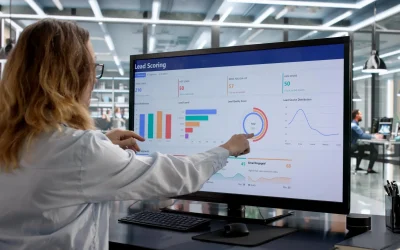
Traditional CRMs often distribute leads in a simple “round-robin” fashion. Zoho AI evaluates lead quality and assigns the “hottest” leads to your top-performing reps automatically. This ensures that your best talent is focused on the deals most likely to close.
4. Scalability: Growing Without the Growing Pains
A common complaint regarding traditional CRMs is that they become increasingly expensive and “heavy” as you grow. Adding more users or more data often leads to laggy performance and exorbitant “enterprise-tier” pricing.
Zoho is built for vertical and horizontal scalability:
- Vertical Scalability: As your data grows, Zoho’s AI gets smarter. It uses the increased data volume to refine its predictive models.
- Horizontal Scalability: Zoho integrates seamlessly with over 45+ other Zoho apps (Books, Projects, Desk, etc.). When you switch to Zoho AI, you aren’t just fixing your CRM; you are building a foundation for your entire business.
Companies looking to scale often find that WebITMagic provides the necessary strategic oversight to ensure that the transition from a legacy system to a scalable Zoho environment is seamless and data-secure.
5. Predictive Analytics vs. Historical Reporting
Traditional CRMs are great at telling you how much you sold last month. But in a volatile market, you need to know what you will sell next month.
Zoho AI offers Predictive Sales Forecasting. By looking at patterns in lead engagement, touchpoints, and industry trends, Zoho provides a forecast that is significantly more accurate than manual “gut-feeling” estimates provided by sales managers.
- The “Best Time to Contact” Feature: This is a game-changer. Zia tracks when a specific lead is most likely to open an email or answer a call based on their past behavior. Instead of cold calling at 10 AM, your reps call when the prospect is actually at their desk. This feature alone drastically increases conversion rates.
6. Enhanced User Engagement and Adoption
A CRM is only useful if your team actually uses it. The “clutter” of traditional systems often leads to low user adoption.
Zoho AI improves engagement by:
- Mobile AI: Reps in the field can use voice commands to update the CRM via Zia Voice.
- Smart Reminders: Instead of a generic “follow-up” notification, Zia reminds reps to reach out because a prospect just engaged with a social media post or visited a pricing page.
- Data Enrichment: Zoho AI can automatically crawl the web to find a prospect’s LinkedIn profile, company size, and latest news, saving hours of research time.
7. ROI: The Cost of Doing Nothing
Many business owners hesitate to switch because of the perceived “hassle” of migration. However, the cost of staying on a traditional CRM is often hidden:
- Lost Opportunities: Due to poor lead prioritization.
- High Churn: Because your team isn’t alerted to dissatisfied customers in time.
- Labor Costs: Paying employees to do manual data entry that AI could handle in seconds.
By migrating to an AI-driven system, businesses typically see a 20-30% increase in sales productivity within the first six months. The system pays for itself by reclaiming “lost time.”
8. How to Make the Switch
Switching from a traditional CRM to Zoho isn’t just about moving data; it’s about reimagining your workflows. To ensure you don’t lose historical data and that your AI is configured correctly from Day 1, working with an expert partner is essential.
At WebITMagic, we specialize in helping businesses transition from legacy systems like Salesforce, HubSpot, or Pipedrive into a fully optimized Zoho AI environment. We don’t just “install” software; we build growth engines.
Conclusion: The Future is Intelligent
The era of the “dumb” CRM is over. As your competitors begin to leverage the power of predictive analytics, automated lead enrichment, and AI-driven insights, staying on a traditional system becomes a liability.
Zoho AI provides the automation you need to save time, the scalability you need to grow, and the intelligence you need to outcompete.
Are you ready to stop managing data and start closing deals?
Don’t let your business get left behind in the manual era. Experience the power of an AI-driven CRM tailored to your unique business needs.
👉 Step 1: Explore our full range of solutions at WebITMagic.
👉 Step 2: Ready for a deep dive? Schedule your Discovery Call today, and let’s discuss how we can migrate your business to Zoho AI.
Frequently Asked Questions
1: Is Zoho AI suitable for small businesses?
Absolutely. One of Zoho’s greatest strengths is that it is “built for everyone.” You can start with the basic AI features and scale as your team grows.
2: How long does the migration from a traditional CRM take?
Depending on the volume of data and the complexity of your current workflows, a migration can take anywhere from a few weeks to a few months. Our team at WebitMagic ensures zero downtime during the transition.
3: Does Zoho AI integrate with non-Zoho apps?
Yes. Zoho has a robust API and integrates with thousands of third-party applications, including G-Suite, Microsoft 365, Slack, and more.

0 Comments