
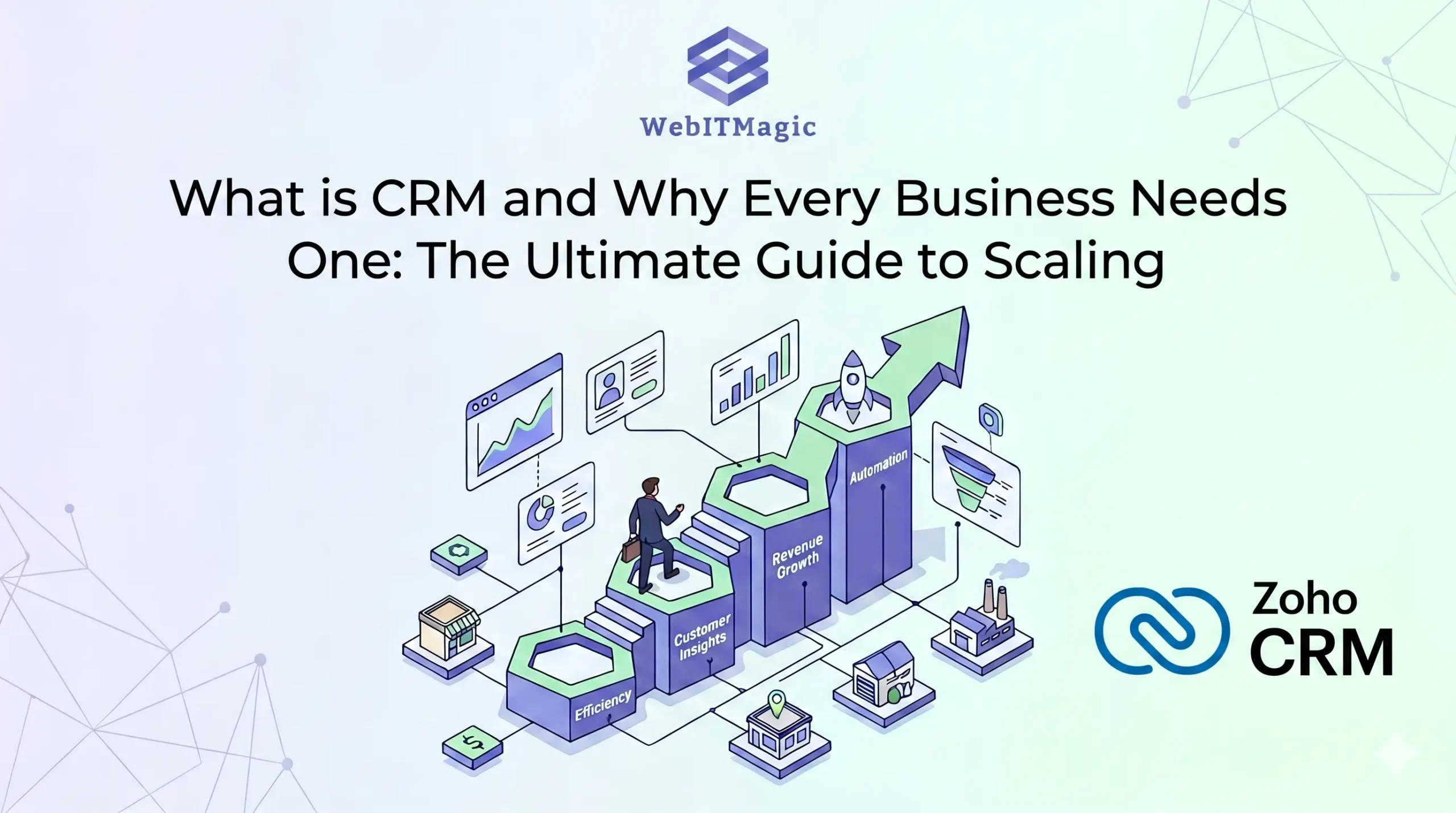
In the modern, hyper-competitive digital landscape, the phrase “the customer is king” has never been more literal. However, you cannot treat a customer like royalty if you don’t actually know who they are, what they bought, or when they last spoke to your team. This is where Customer Relationship Management (CRM) moves from being a “nice-to-have” software to the literal heartbeat of your organization.
If you are looking to streamline your operations right now,
visit www.webitmagic.com/zoho-crm-perth to see how localized expertise can transform your workflow.
Understanding the Core: What is CRM?
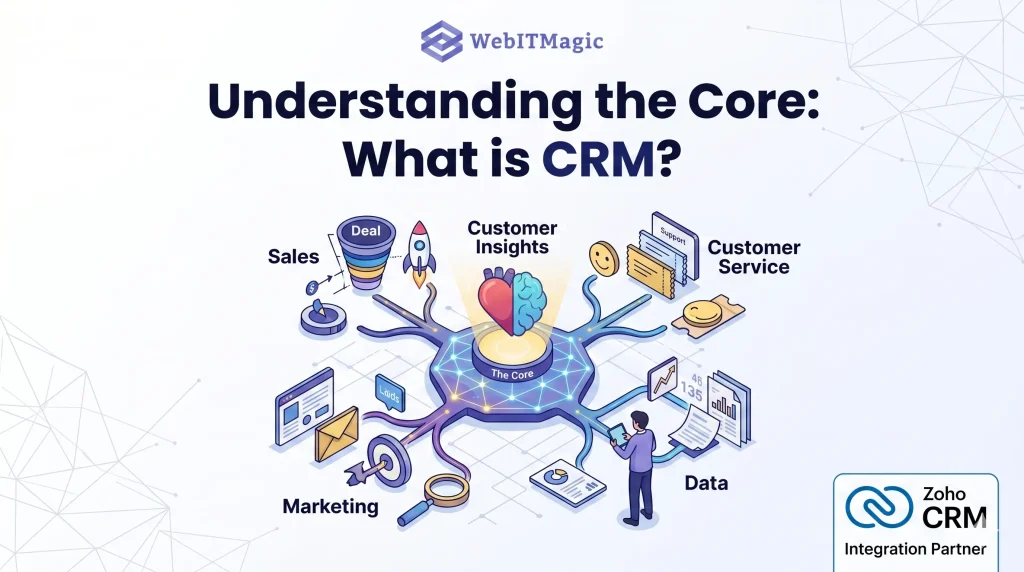
At its core, a CRM is a strategic combination of technology and methodology designed to manage and analyze customer interactions throughout the entire lifecycle. The primary goal is simple: improve business relationships to drive retention and sales growth.
While the concept sounds straightforward, the execution involves a sophisticated web of data aggregation. A CRM system centralizes customer information, making it accessible to every department—from the front-desk receptionist to the CEO. Instead of losing information in the “black hole” of scattered spreadsheets and sticky notes, all relevant data resides in one organized, secure database.
1. Data Aggregation and Centralization
The primary function of any CRM is to act as a single source of truth. It isn’t just about storing names and phone numbers; it’s about recording every digital footprint a customer leaves. This includes:
- Initial website visits and source tracking.
- Marketing campaign responses (clicks and opens).
- Detailed communication logs (emails, calls, and chats).
- Support tickets and resolution history.
By bringing this information together, businesses gain a 360-degree view of the customer. When your team has the full context, they don’t ask “Who are you?”—they ask “How can I help you today, Sarah?”
2. Tracking the Customer Journey
Beyond storage, CRM systems excel at tracking the “path to purchase.” Every touchpoint is a data point. This detailed record-keeping allows businesses to identify patterns: Which marketing channel is most effective? Where do people usually drop off?
Pro Tip: Understanding these bottlenecks allows you to fix your “leaky bucket” before spending more money on ads.
The Indispensable Role of CRM in Sales Processes
For a sales team, a CRM is the difference between “guessing” and “closing.” It transforms the daily grind of prospecting into a streamlined, high-velocity engine.
- Streamlining the Sales Pipeline
A well-configured CRM provides a visual representation of your sales pipeline. Typically, this is broken down into stages:
- New Lead: Raw interest.
- Contacted: Initial engagement.
- Proposal Sent: The “make or break” stage.
- Closed Won/Lost: The final result.
This visualization allows managers to see exactly where deals are stalling. If you have 50 leads in “Proposal Sent” but zero moving to “Closed Won,” you know exactly where your team needs coaching.
- Enhancing Sales Forecasting Accuracy
How do you plan for next quarter? Without a CRM, it’s guesswork. With a CRM, you can look at historical “win rates” and current pipeline value to predict revenue with startling accuracy. This allows for better resource allocation, smarter hiring, and more confident investment.
- Personalization at Scale
The importance of CRM for business growth is most evident in personalization. If a sales rep knows a prospect’s industry, their specific pain points, and their past objections, the sales pitch becomes a consultation. People buy from people who understand them.
Elevating Customer Service to a Competitive Advantage
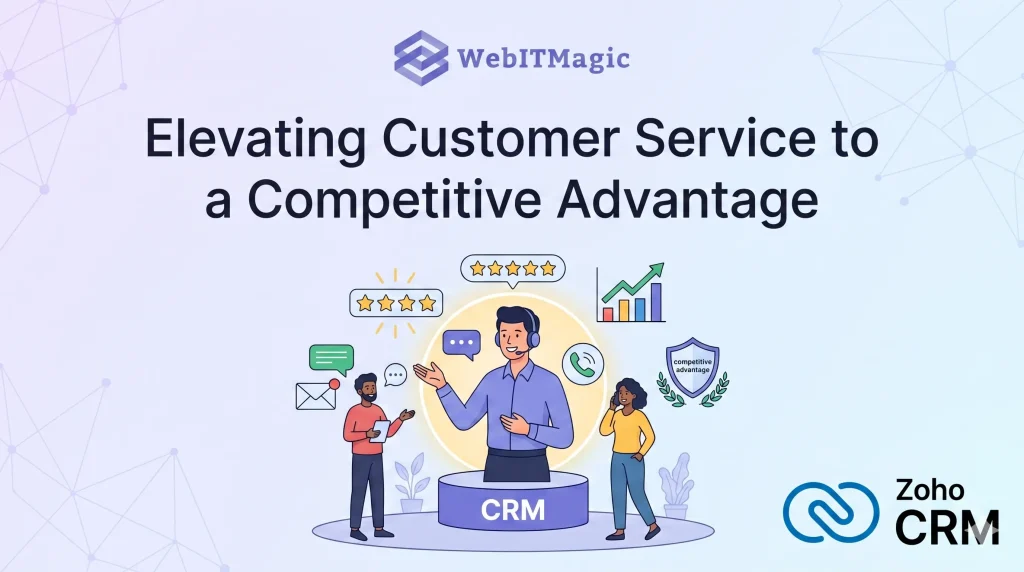
Customer service is often the only thing separating you from your competitors. A CRM empowers your support team to provide “wow” experiences consistently.
- Centralized Support Information
There is nothing more frustrating for a customer than repeating their problem to three different agents. A CRM eliminates this. When a customer calls, the agent sees their entire history instantly. This unified view ensures that inquiries are handled with speed and precision.
- Faster Case Resolution
With access to a built-in knowledge base and historical data, agents can resolve issues in minutes rather than days. A CRM can even automate the ticketing process, ensuring that high-priority clients are moved to the front of the queue.
- Proactive vs. Reactive Support
Why wait for a customer to complain? By analyzing usage patterns, a CRM can flag a customer who hasn’t logged into your software or used your service in 30 days. This “churn signal” allows you to reach out proactively, solve their problem, and save the account before they cancel.
Need a hand setting this up? Learn more about Zoho CRM in Perth and start automating your excellence.
Enhancing Marketing Efforts with Data-Driven Insights
Marketing without a CRM is like throwing spaghetti at a wall. Marketing with a CRM is like using a laser-guided missile.
- Targeted Campaign Development
Granular data allows for sophisticated segmentation. You can send an email blast specifically to “Customers in Perth who bought a printer in the last 6 months but haven’t bought ink.” This level of targeting results in significantly higher conversion rates and lower unsubscribe rates.
- Measuring ROI
CRMs provide the “closed-loop” reporting that marketers crave. You can finally see exactly which Facebook ad led to a $10,000 sale. This data-driven approach empowers teams to stop wasting budget on underperforming channels and double down on what works.
For a deeper dive into these strategies, read our full article: The Essential Guide to CRM: Boosting Customer Satisfaction and Loyalty.
Why Every Business Needs a CRM: The Bottom Line
If you are still on the fence about the importance of CRM for business growth, consider these two major factors: Retention and Expansion.
1. Improving Customer Retention
It is 5x to 25x more expensive to acquire a new customer than to keep an existing one. A CRM provides the tools—reminders, birthday greetings, automated follow-ups—that make a customer feel like a partner, not a transaction.
2. Identifying Upselling Opportunities
When you know what a customer owns, you know what they need next. A CRM can suggest cross-selling opportunities to your sales team at the exact moment the customer is most likely to buy.
| Benefit | Impact on Business |
| Centralized Data | No more lost leads or forgotten emails. |
| Automated Workflows | Team spends more time selling, less time on admin. |
| Accurate Reporting | Make decisions based on facts, not feelings. |
| Improved Personalization | Higher conversion rates and brand loyalty. |
The Path Forward: Implementing Your CRM Strategy
Adopting a CRM is more than just buying software; it’s a commitment to a customer-centric culture. Whether you are a small startup or an established enterprise in Perth, the right CRM configuration can be the catalyst for your next stage of growth.
The transition doesn’t have to be overwhelming. By focusing on your core sales pipeline first and gradually integrating marketing and support, you can see an immediate ROI without disrupting your daily operations.
- Stop Leaving Money on the Table
Every day you operate without a centralized system is a day you lose data, lose leads, and lose revenue. The “importance of CRM for business growth” isn’t just a buzzphrase—it’s the documented reality of every successful modern company.
Ready to stop the chaos and start growing?
👉 Book your free strategy call today and let’s map out a CRM solution that actually works for your specific business goals.
Frequently Asked Questions
1. What is the main purpose of a CRM?
The main purpose is to manage and improve how a business interacts with its customers and potential leads to drive sales and satisfaction.
2. Is a CRM only for large businesses?
Absolutely not. Small businesses often benefit the most from CRMs because they have fewer resources and need the automation to compete with larger players.
3. How long does it take to see results?
While data organization is instant, most businesses see significant ROI in sales efficiency and lead conversion within 3 to 6 months of proper implementation.
4. Can a CRM integrate with my existing tools?
Yes, modern systems like Zoho CRM integrate with email, accounting software (like Xero), social media, and even your website forms.

0 Comments